


Recycling bins for shopping malls should match the waste generated at each location, the available floor space and the cleaning team’s collection schedule. A food court, a retail corridor and an entrance rarely need identical stations.
For facility managers and procurement teams, the practical question is which combination of compartments, capacity and placement will make sorting straightforward without disrupting visitors or daily maintenance. This guide focuses on those decisions, from the first floor plan to the purchasing brief.
Table of Content
How to Choose Recycling Bins for Shopping Malls
Start with the materials your waste contractor actually accepts. Bottles, cans, paper and food packaging may need separate collections or an agreed combination. Do not add a compartment simply because its label appears on a standard product.
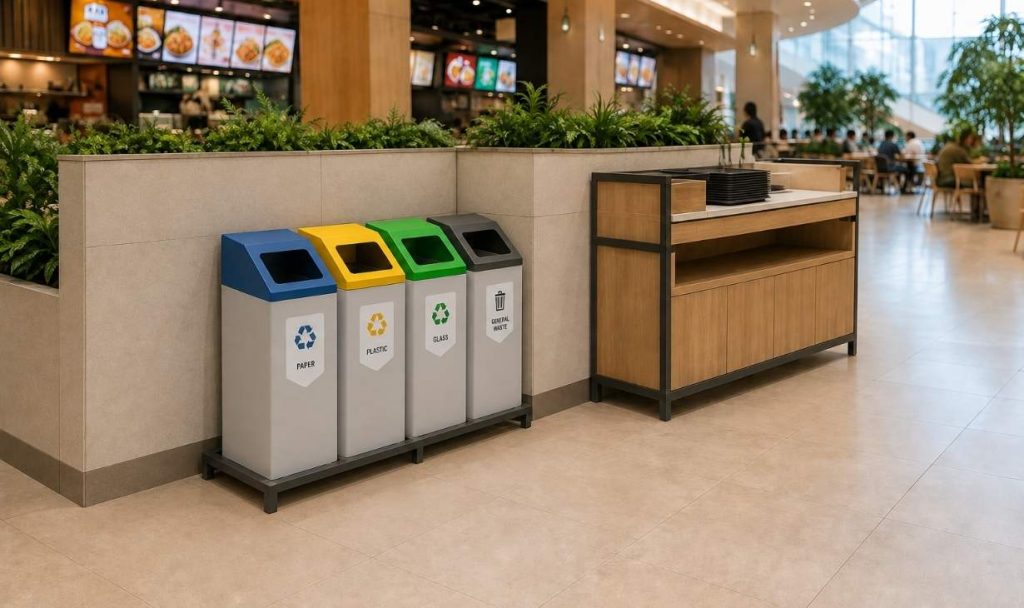
When specifying commercial recycling bins, define the waste stream for each compartment before choosing the exterior design. Shopping mall recycling bins also need a clearly identified general waste option, either within the station or directly beside it.
The US EPA recommends placing recycling and trash bins together, using clear pictures and keeping signage consistent throughout a building. These are useful starting points for a mall sorting system. EPA commercial building guidance
Match the Station to Each Mall Area
The following configurations are planning examples, subject to the site’s collection arrangements.
| Location | Waste to assess | Possible configuration | Placement priority |
| Food court | Food scraps, accepted packaging and general waste | Three or four compartments where these streams are collected | Near tray returns, clear of queues |
| Retail corridors | Drinks containers and general waste | Two compartments, or three where paper is collected separately | Visible from seating and walking routes |
| Entrances and lobbies | Takeaway packaging and general waste | Compact two or three compartment station | Easy to find without narrowing entrances |
| Offices and staff areas | Paper, packaging and general waste | Two or three compartments suited to local use | Near printers or staff kitchens |
| Outdoor seating areas | Drinks packaging and general waste | Weather resistant grouped units | Accessible for users and cleaning staff |
For recycling bins for shopping centres, compartment count should follow the local waste profile. Four equal compartments may waste space if one stream fills much faster than the others. Record which sections fill first before repeating the same specification across every floor.
Set Capacity Around Emptying Intervals
Size each compartment for the material expected between two collection rounds, with additional room for busy periods. Total station capacity can be misleading: a large unit may still overflow if its bottle compartment is too small.
For example, if one compartment receives about 45 litres between rounds, a 40 litre compartment would not cover that interval. Consider a larger compartment or more frequent emptying, then check the practical weight of the filled bag.
When comparing recycling bins for shopping centers, request usable capacity per compartment, external dimensions and clearance needed to remove the liners. These details matter more than a single headline capacity.
Specify Materials, Cleaning Access and Stability
For permanent indoor locations, evaluate metal thickness, surface finish and resistance to the cleaning products used on site. BDB Metal’s indoor recycling bins include different body shapes and grouped configurations, with options bag retention, labels and custom colours.
Ask the cleaning team to review a sample or detailed drawing. Can they replace each bag without moving the whole station? Is the service opening wide enough? Can they reach the corners where spills collect?
Shopping centre recycling bins should remain stable during everyday use. Specify the standing or fixing arrangement for each location; do not assume that a decorative public station needs wheels.
For exposed entrances and parking areas, assess rain protection, corrosion protection and anchoring needs separately. BDB’s outdoor recycling bins provide a separate product group for these environments.
Make Labels and Placement Easy to Understand
Use short material names and recognisable examples beside the openings. Keep the same stream in the same position across comparable stations. Shopping center recycling bins should not change their sorting logic from one floor to the next.
In food courts, show the packaging visitors actually receive from tenants. A generic recycling symbol does not tell someone whether a particular coated cup belongs in that compartment. Confirm acceptance with the contractor before printing labels.
Keep mall garbage cans for residual waste beside the recycling options. Check placement from a seated position as well as standing height, and allow space for wheelchair users, pushchairs and maintenance access. Branding should leave the sorting instructions clearly visible.
Prepare a Clear Procurement Brief
For recycling bins for malls, provide quantities by location, waste streams, capacity per compartment, dimensions, material and finish, liner arrangement, fixing needs, labels, logo and delivery destination. Request drawings that show both visitor access and maintenance access.
Recycling Bin Manufacturing for Shopping Mall Projects
BDB Metal manufactures recycling units for indoor and outdoor spaces, with compartment layouts, dimensions, RAL colours, logos and pictograms tailored to project requirements. For shopping malls, this allows food courts, retail corridors and entrances to share a consistent design while using different configurations where needed.
Operating four factories in Ankara, Türkiye, and exporting to more than 40 countries, BDB Metal works with international buyers on bulk and custom equipment orders. Metal recycling units can be complemented by plastic, polycarbonate or cardboard options where appropriate to the location and application.
Share your floor plan, waste streams, quantities and delivery destination to discuss suitable recycling stations for each area.
For the next stage—moving separated waste to service areas and central containers—see our shopping mall waste management guide.

Other News
Recycling Bins for Shopping Malls: Selection and Placement
Recycling bins for shopping malls should match the waste generated...
Sep
Shopping Mall Waste Management: Collection and Storage
Shopping mall waste management needs a continuous route from shops,...
Sep
Recycling Bins for Hotels: A Practical Buying Guide
Recycling bins for hotels need to work for both guests...
Sep
Hotel Waste Management: A Practical Planning Guide
Hotel waste management connects waste prevention, separation, internal collection and...
Sep
Recycling Symbols 1–7 Explained: What They Mean on Packaging and Bins
Recycling symbols on packaging and bins carry specific information about...
Jun
Recycling Bins for Municipalities: The Right Model for Every Public Space
Recycling bins for municipalities must serve a wide range of...
Jun
Abroll Container & Hooklift Container Systems: What They Are and Why They Work
Learn how abroll and hooklift container systems work, key differences...
Apr
Roll-On Roll-Off Containers vs. Skip Bins: Which System Is Right for Your Waste Operations?
Roll-on roll-off containers vs. skip bins: compare capacity, site fit...
Mar
What is a Trash Receptacle? A Professional Guide to Commercial Waste Management
What is a trash receptacle? Discover how commercial-grade designs improve...
Feb