


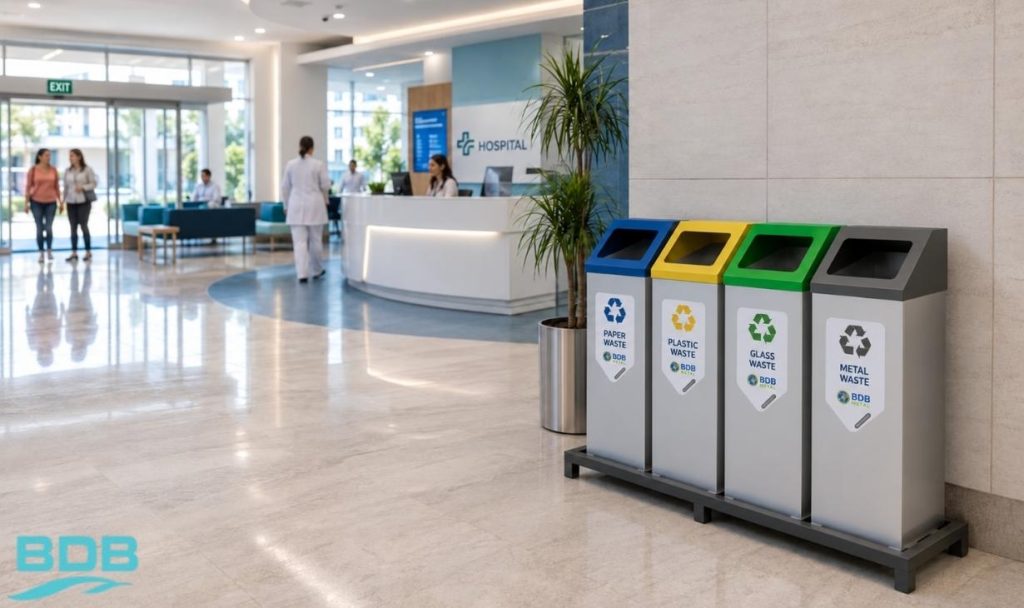
Hospital recycling bins should match the materials collected in each area, the space available and the cleaning team’s emptying schedule. For procurement teams and facility managers, the priority is to specify equipment that patients, visitors and staff can use clearly and that cleaning teams can service efficiently. This guide covers recycling bins for hospitals’ public…
General Category
Wholesale Galvanized Waste Containers for Municipalities: The Complete EN 840 & EN 1461 Buyer’s Guide
22
Sep
Sep
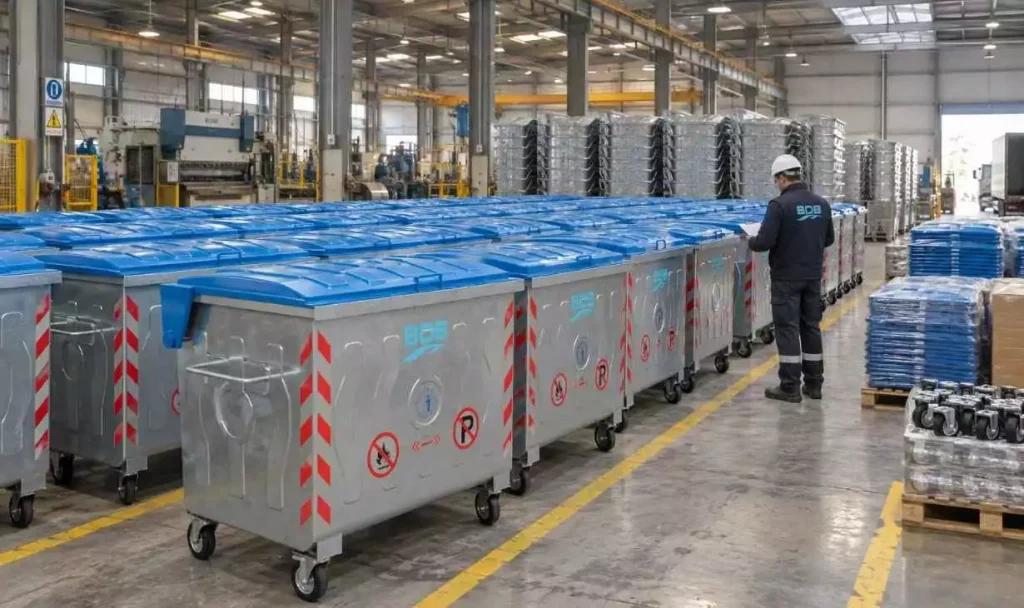
Buying wholesale galvanized waste containers for a municipality requires more than comparing capacity and unit price. Procurement teams also need to evaluate EN 840 compatibility, galvanizing quality, steel thickness, lifting systems, corrosion protection, container loading efficiency, customization and long-term operating cost. At BDB Metal, we manufacture metal waste-container solutions in Turkey for municipal, commercial and…
General Category
DIN 30720 Skip & Hooklift Containers: Dimensions, Hook Heights and Compliance Checklist
22
Sep
Sep
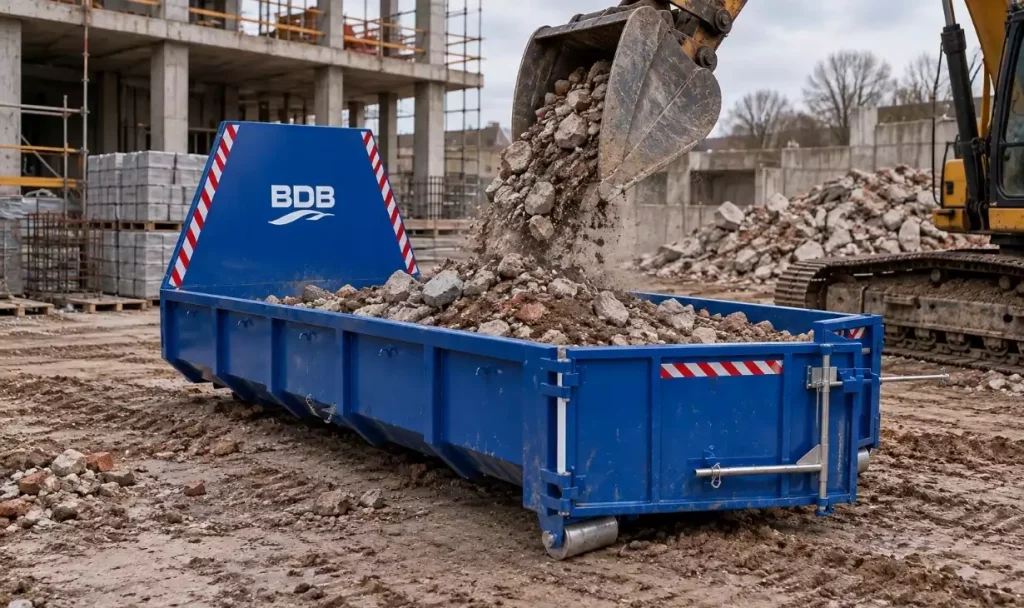
When you are purchasing containers for construction rubble, demolition waste, mining materials or industrial waste, DIN compatibility is one of the first technical details you should verify. A container may have the correct capacity and steel thickness but still create operational problems if its lifting interface does not match the vehicle that will transport it….
22
Sep
Sep
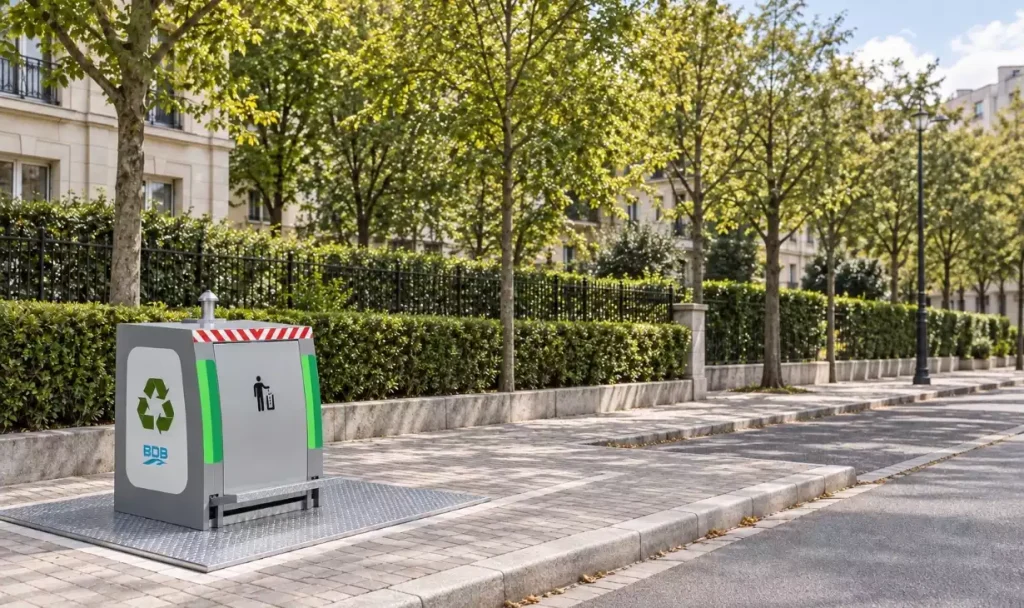
When you purchase an aboveground or underground waste container, capacity and material are only part of the specification. If the container will be emptied by crane, the lifting connection must also match the collection vehicle and its handling equipment. This becomes especially important when specifications mention terms such as Kinshofer, double hook, mushroom lifting system,…
08
Sep
Sep
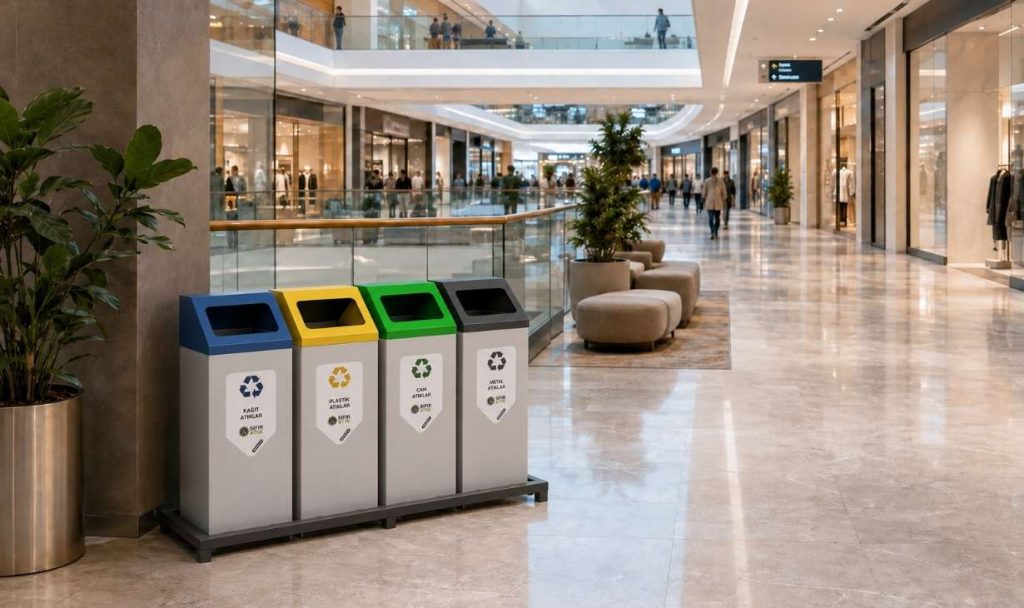
Recycling bins for shopping malls should match the waste generated at each location, the available floor space and the cleaning team’s collection schedule. A food court, a retail corridor and an entrance rarely need identical stations. For facility managers and procurement teams, the practical question is which combination of compartments, capacity and placement will make…
08
Sep
Sep
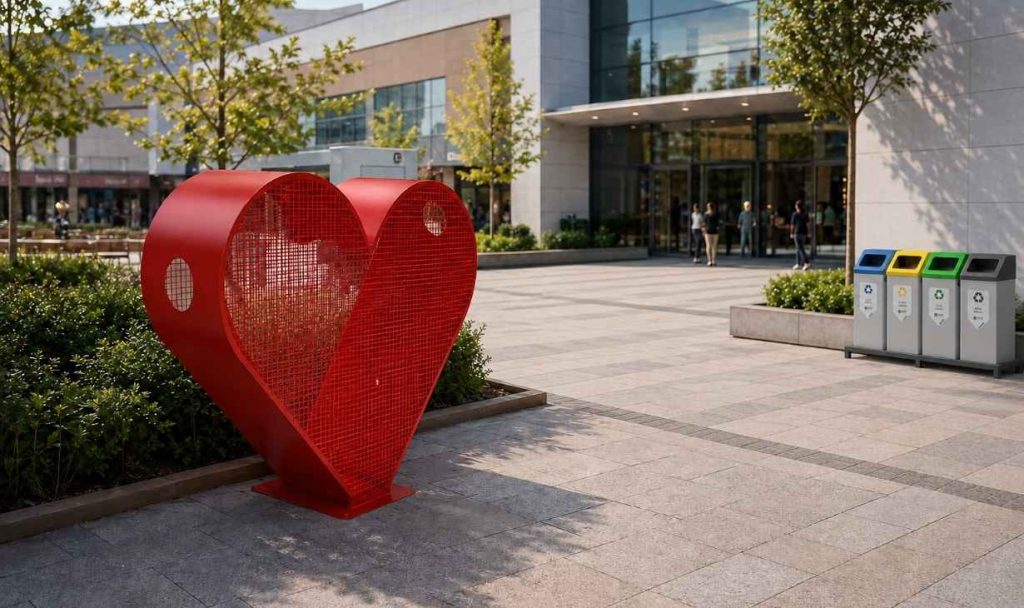
Shopping mall waste management needs a continuous route from shops, restaurants and public areas to central storage and vehicle collection. Separating materials at the first bin achieves little if they are mixed together during transfer. For mall operators, the priority is to connect tenant responsibilities, cleaning rounds, container capacity and collection access. This guide explains…
08
Sep
Sep
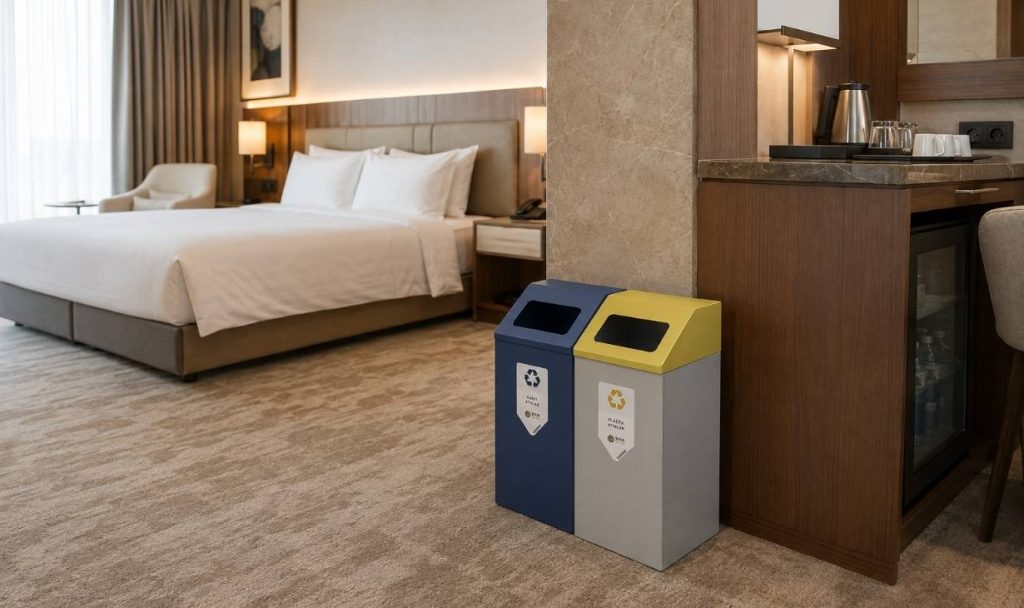
Recycling bins for hotels need to work for both guests and the teams servicing them. A compact room bin, a lobby recycling station and a kitchen service container perform different jobs, but their selection should follow one coordinated plan. The purchasing decision involves more than appearance and capacity. Compartment layout, material, labels, cleaning access and…
08
Sep
Sep
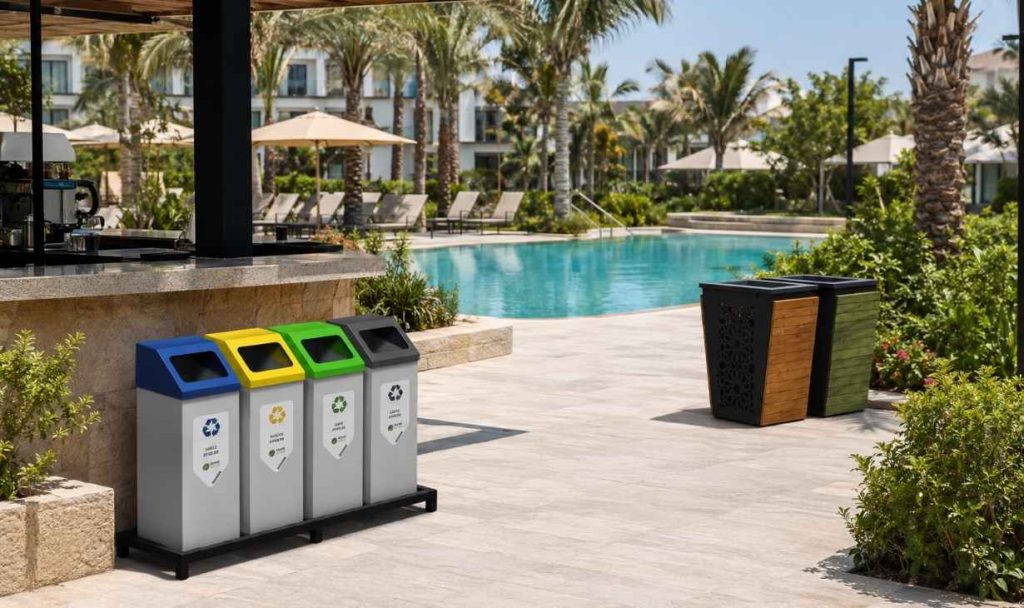
Hotel waste management connects waste prevention, separation, internal collection and storage into one working system. For hotel operators, the challenge is keeping that system consistent from a guest’s room to the containers awaiting collection outside. A lobby recycling station cannot solve overflowing kitchen containers. Equally, mixing separately collected materials during housekeeping can undermine separation efforts…
14
Jun
Jun
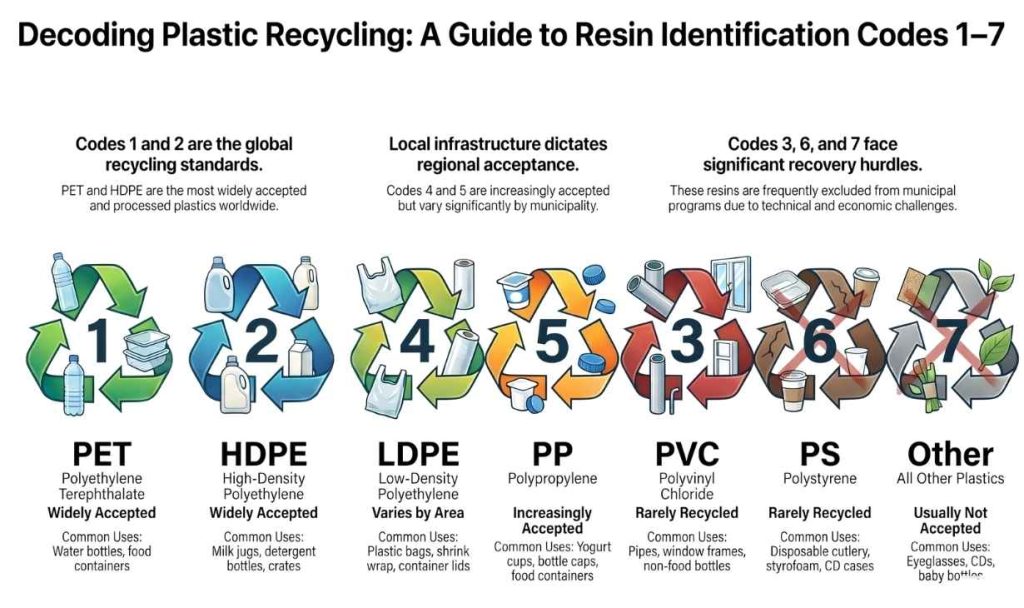
Recycling symbols on packaging and bins carry specific information about material type, recyclability and disposal requirements. Most people recognize the familiar triangle made of chasing arrows, yet relatively few understand what the number inside it actually represents. Likewise, symbols such as the Green Dot, WEEE mark and Tidyman are often misunderstood. Understanding these labels is…

14
Jun
Jun
Recycling bins for municipalities must serve a wide range of public environments, from parks and transport hubs to schools, sports facilities, and event venues. Each location comes with unique operational requirements, including varying levels of foot traffic, weather exposure, maintenance demands, and user behavior. Selecting the wrong bin type can lead to higher maintenance costs,…
- 1
- 2
